
Our Toolbox
Our toolbox covers everything from genotype to phenotype, across all biological levels, and from the field to the laboratory. No single method can explain how an animal is built. We therefore use the same set of methods across many different animals.
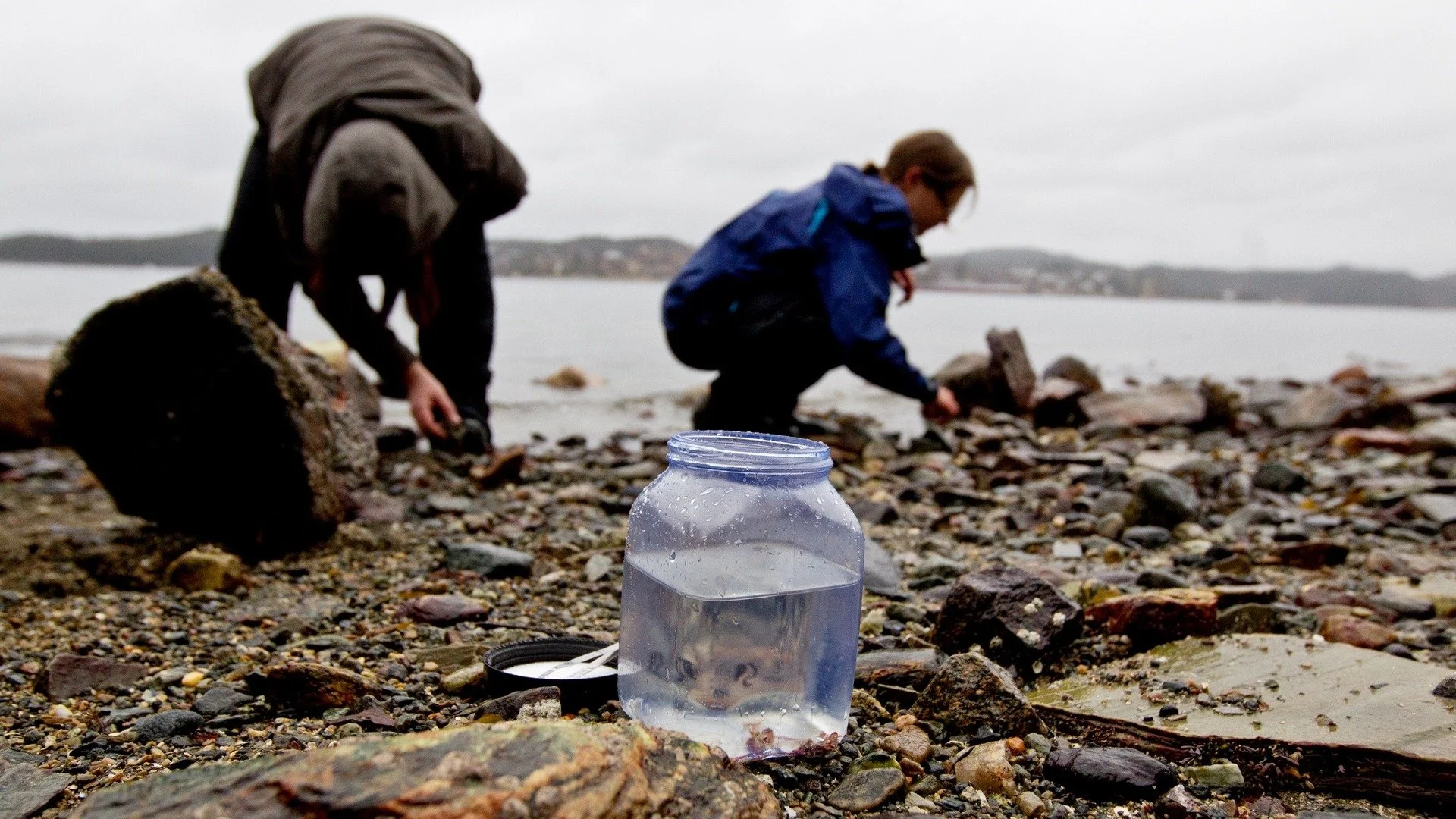
Field work
Image: Andreas HejnolMany of the animals we study live in the sea and cannot be ordered from a supplier. We collect them on the shore and work with fresh embryos at marine stations in Roscoff (France), Kristineberg (Sweden) and Bergen (Norway), and at the Friday Harbor Laboratories (USA).
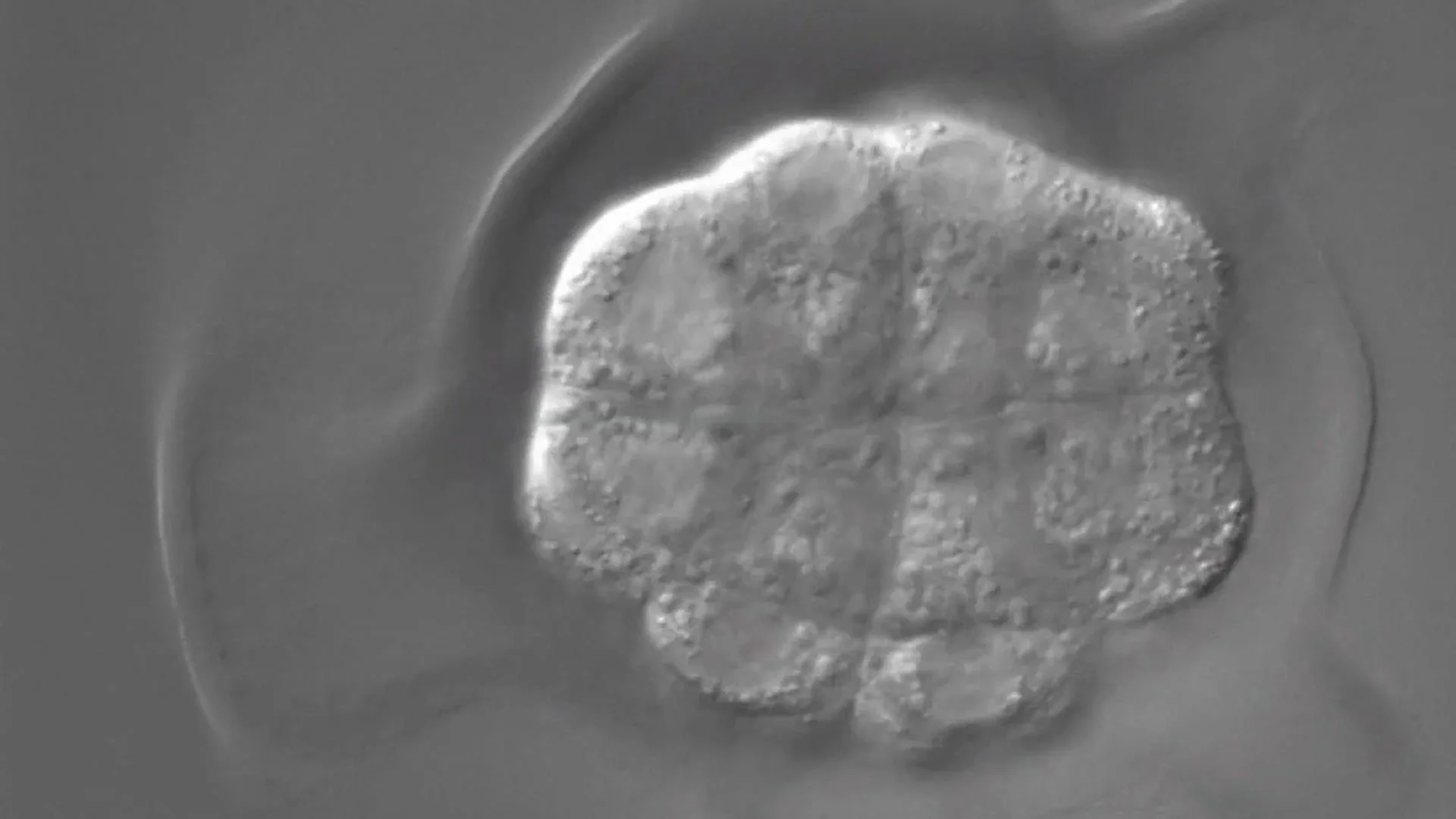
4D microscopy and cell lineage
Image: Bruno VellutiniWe record living embryos in three dimensions over time and follow their cells from the egg to the larva.
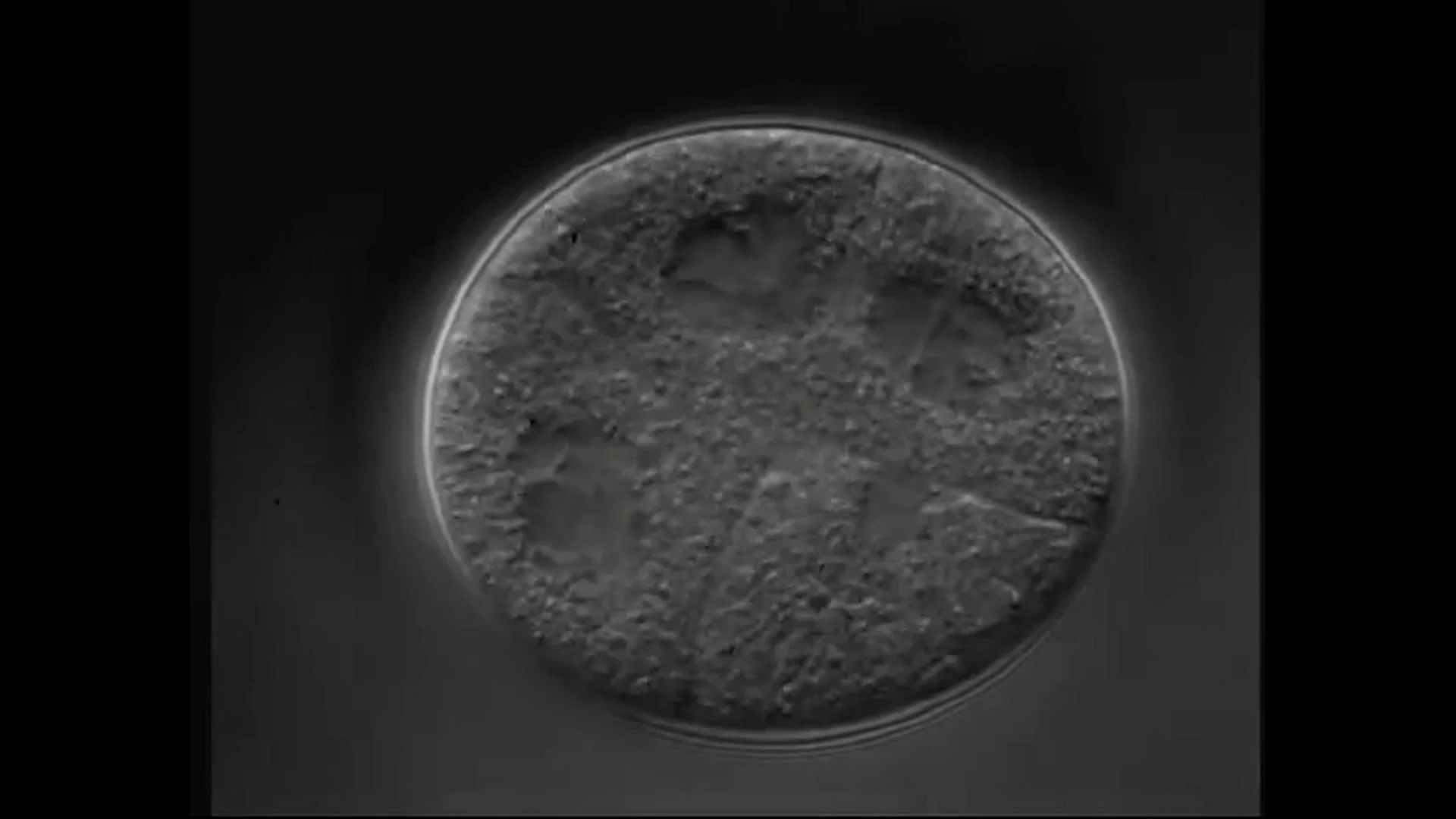
Laser ablation
Image: Andreas HejnolWe remove single cells from living embryos with a laser to test their fate and the ability of the embryo to regulate. Currently we use this to study how cell fates are determined in ctenophore embryos.
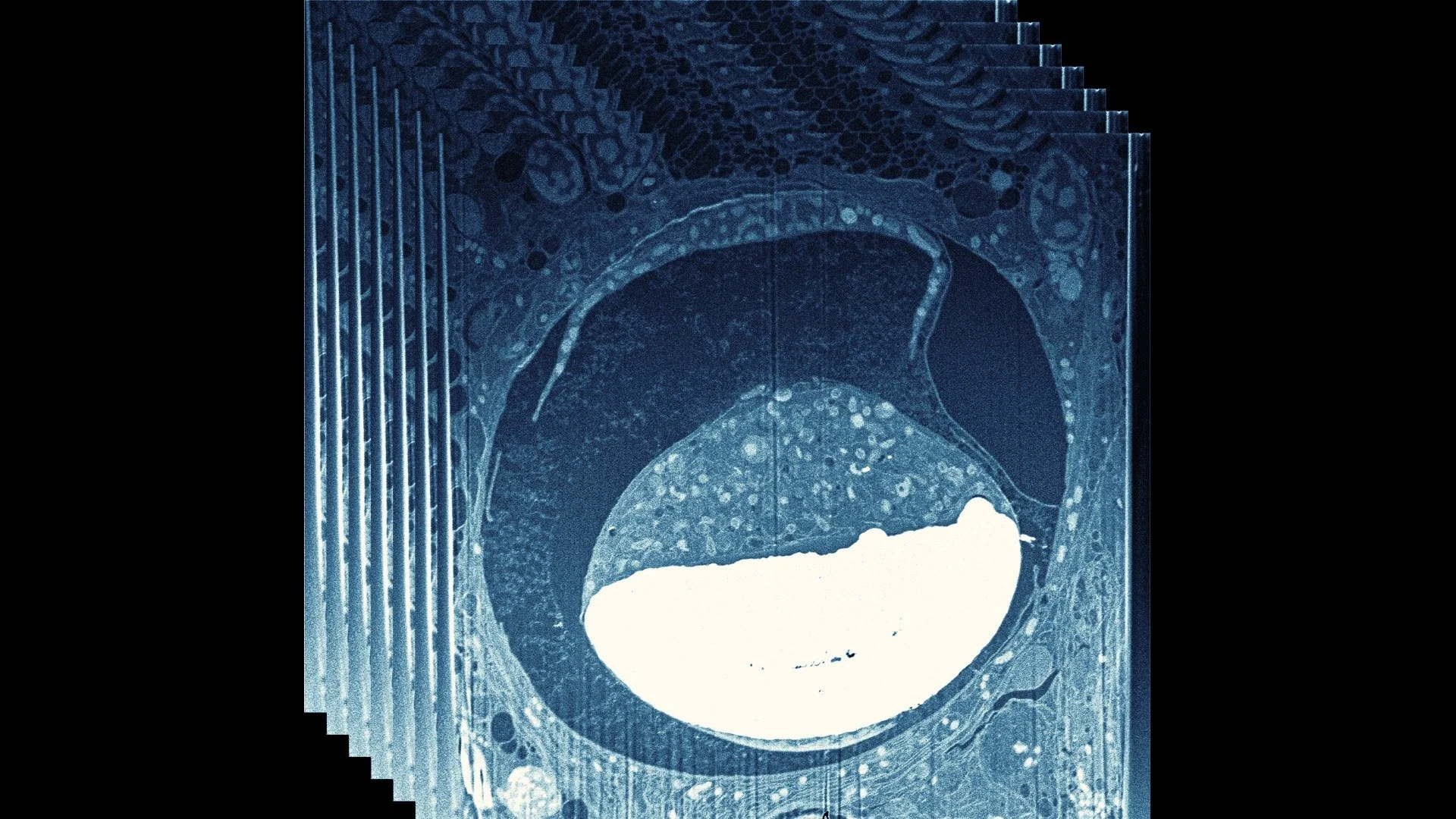
Volume electron microscopy
Image: Nina LevinWe image whole tissues and small animals as series of thin sections and reconstruct their cells in three dimensions. Depending on the question we use FIB-SEM, SBF-SEM or array tomography, for example to reconstruct the nervous system of a nematomorph larva, the innervation of sensory organs and neural circuits.
Confocal and expansion microscopy
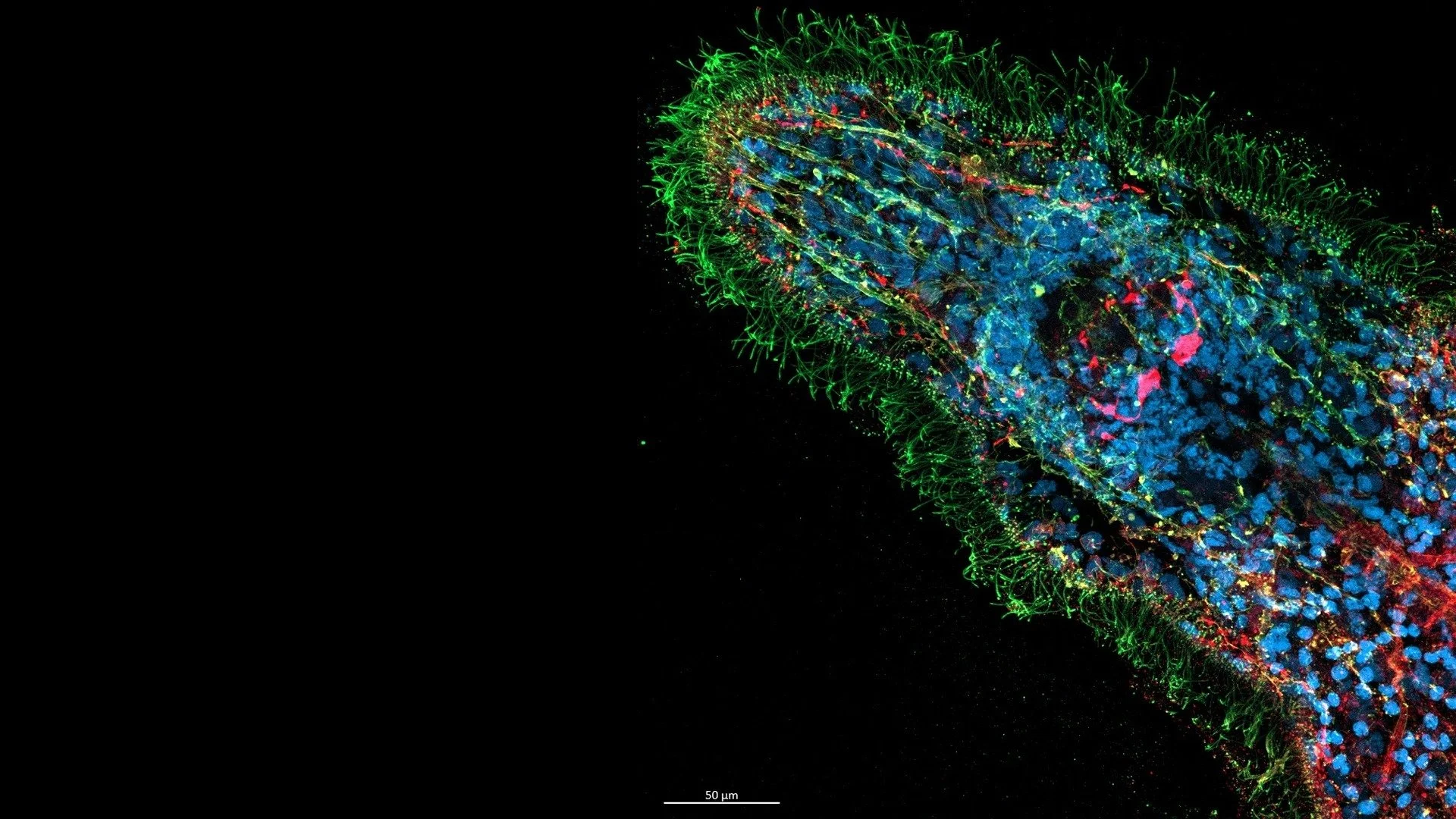
Image: Tatyana LebedevaWe image nerves, muscles and other tissues in whole embryos and larvae. With expansion microscopy we analyse the brain of catenulid flatworms.
Gene expression
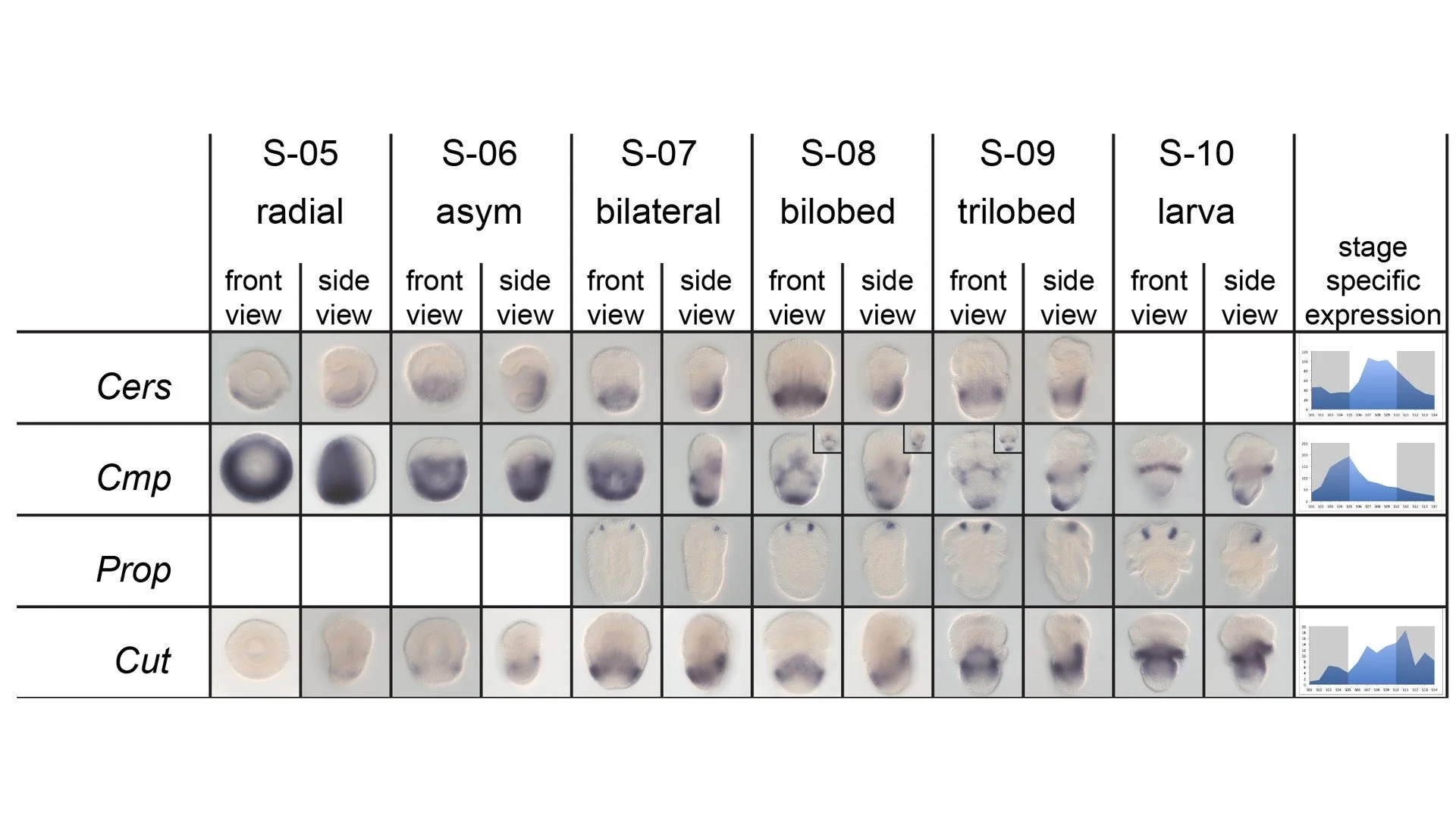
Image: Andreas HejnolIn situ hybridization shows where and when genes are active in embryos and larvae, and lets us compare expression patterns between species.
Functional experiments
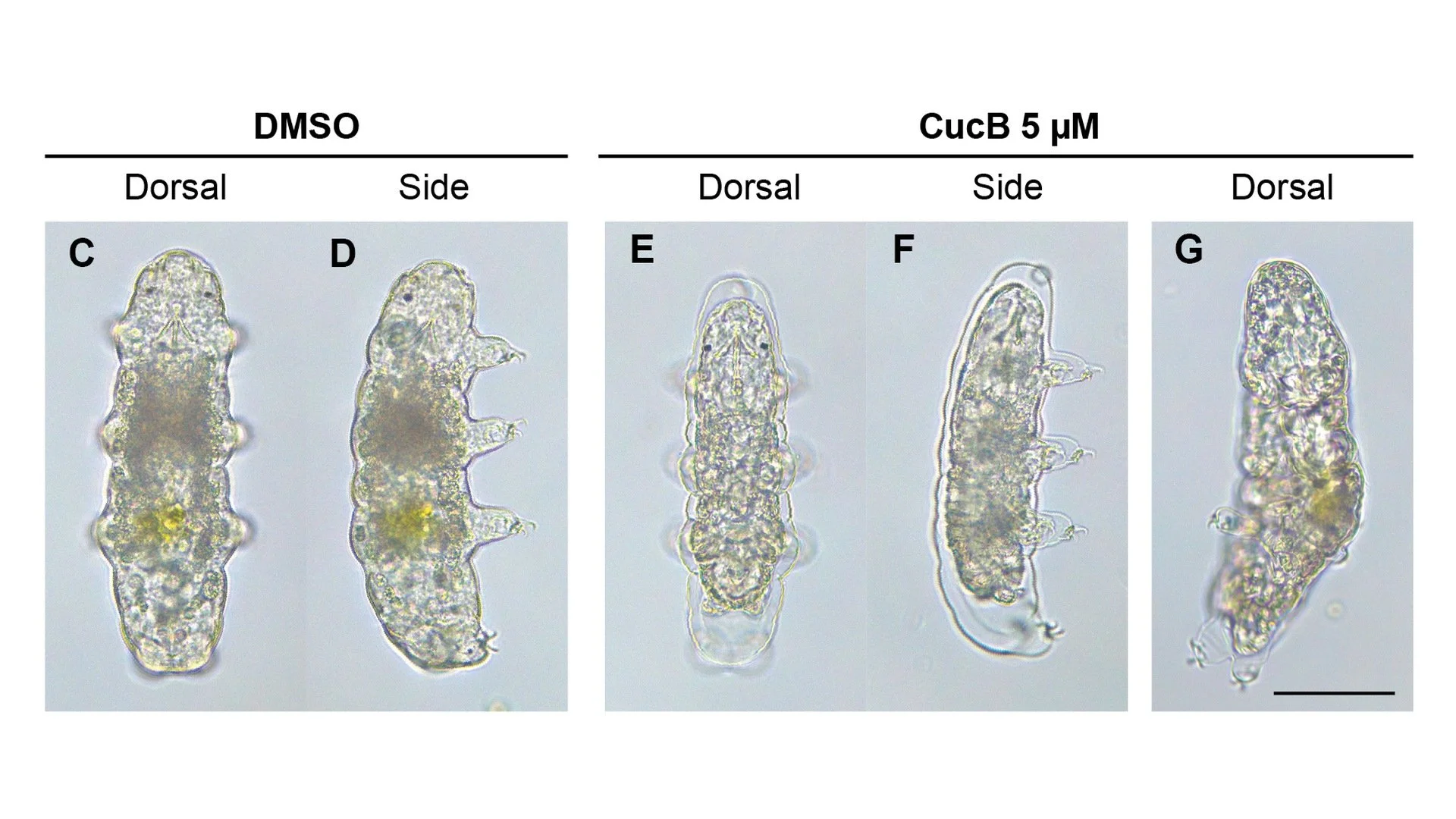
Image: Yamakawa & Hejnol 2024We interfere with genes, hormones and signalling pathways to test what they do during development. We test the function of proteins in several animals, mainly in ctenophores, with morpholino knockdown and chemical inhibitors. Genome editing with CRISPR-Cas9 is in preparation.
Single-cell and spatial transcriptomics
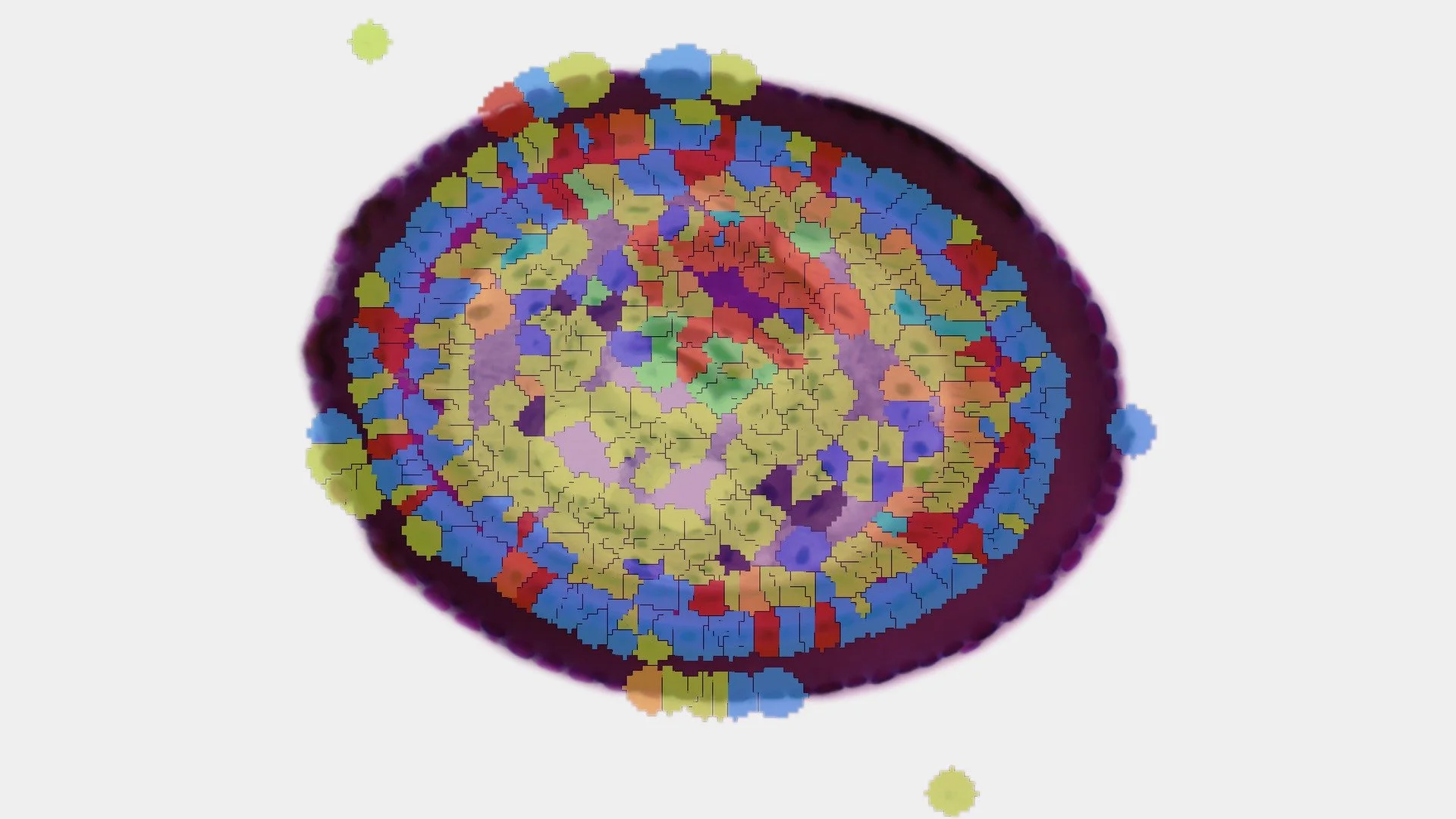
Image: Andreas HejnolWe read the gene activity of thousands of single cells and map where these cells lie in the animal. Currently we apply this to nematomorphs and siboglinids.
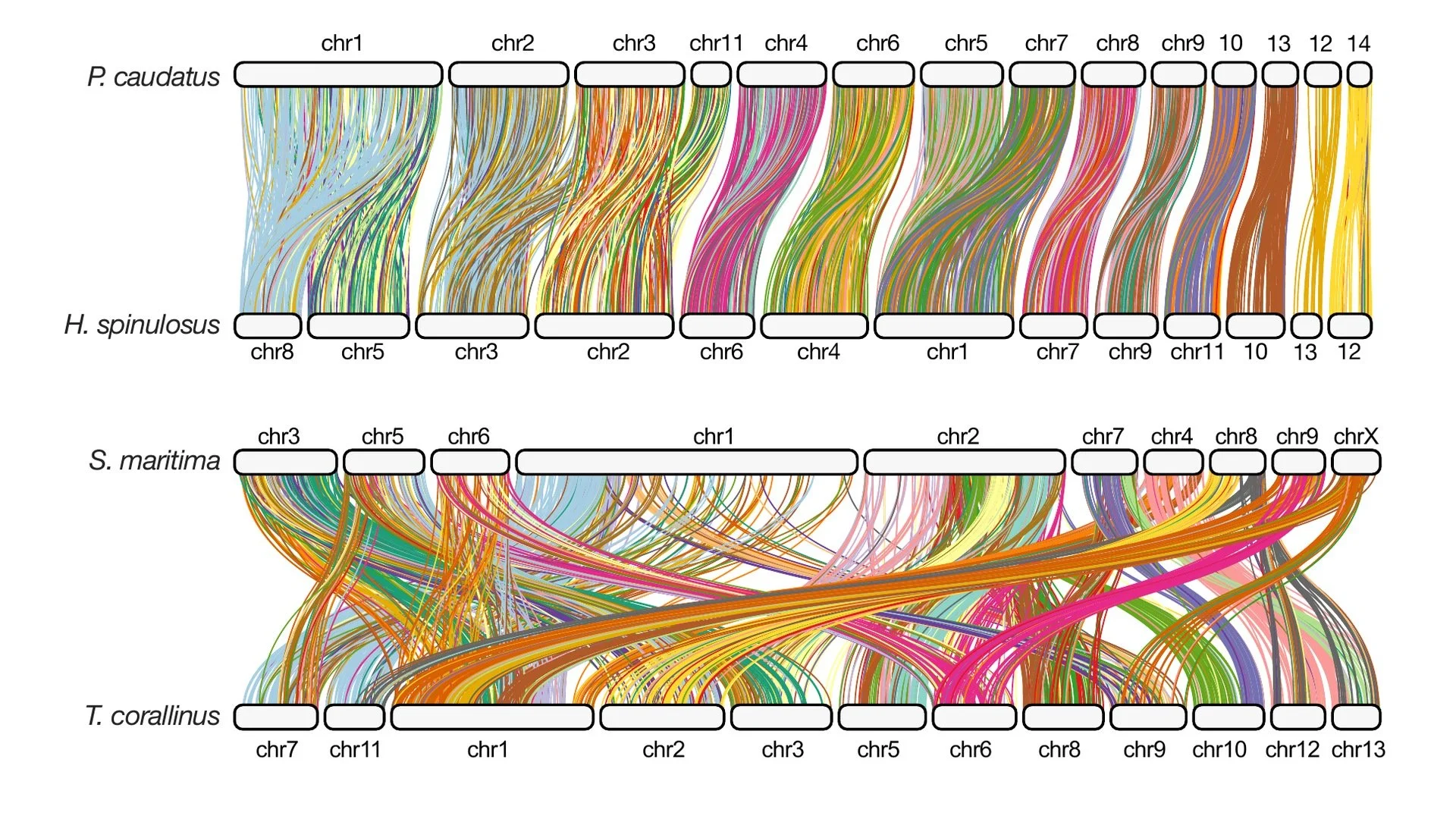
Genomics and phylogenomics
Image: Marlétaz et al. 2026We sequence the genomes of understudied invertebrates and use large datasets to resolve the animal tree of life.